Do Rats Have More Than One Working Memory System?
Working Memory Systems in the Rat
Bratch, A., Kann, S., Cain, J. A., Wu, J.-E., Rivera-Reyes, N., Dalecki, S., ... Crystal, J. D.
What's the Point?
This study tests whether rats use separate working-memory systems for smells and spaces, as humans appear to do. A dual-task paradigm provides the first causal evidence for domain-specific working memory in a non-human animal.
In humans, working memory—holding information in mind for a few seconds—looks like it may run on separate systems for different kinds of information (e.g., what you see vs. what you smell). Whether this modular architecture exists in other animals was unclear.
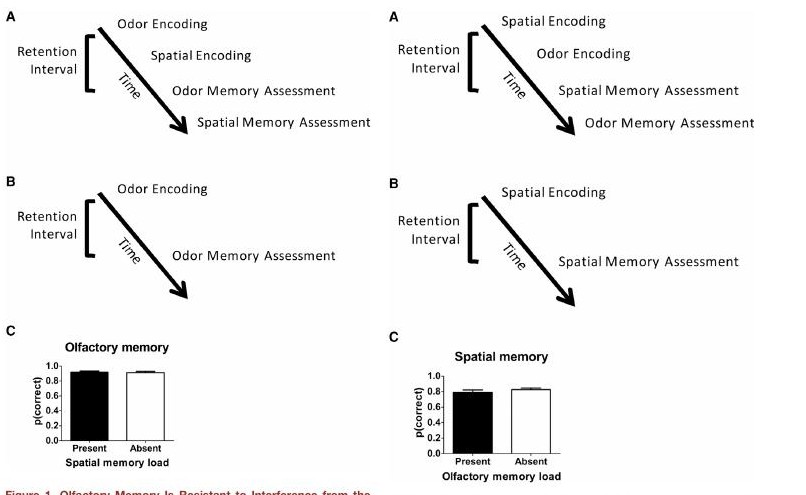
Rats were trained on a dual-task paradigm combining an olfactory working-memory task with a spatial working-memory task, so that interference between systems could be measured directly.
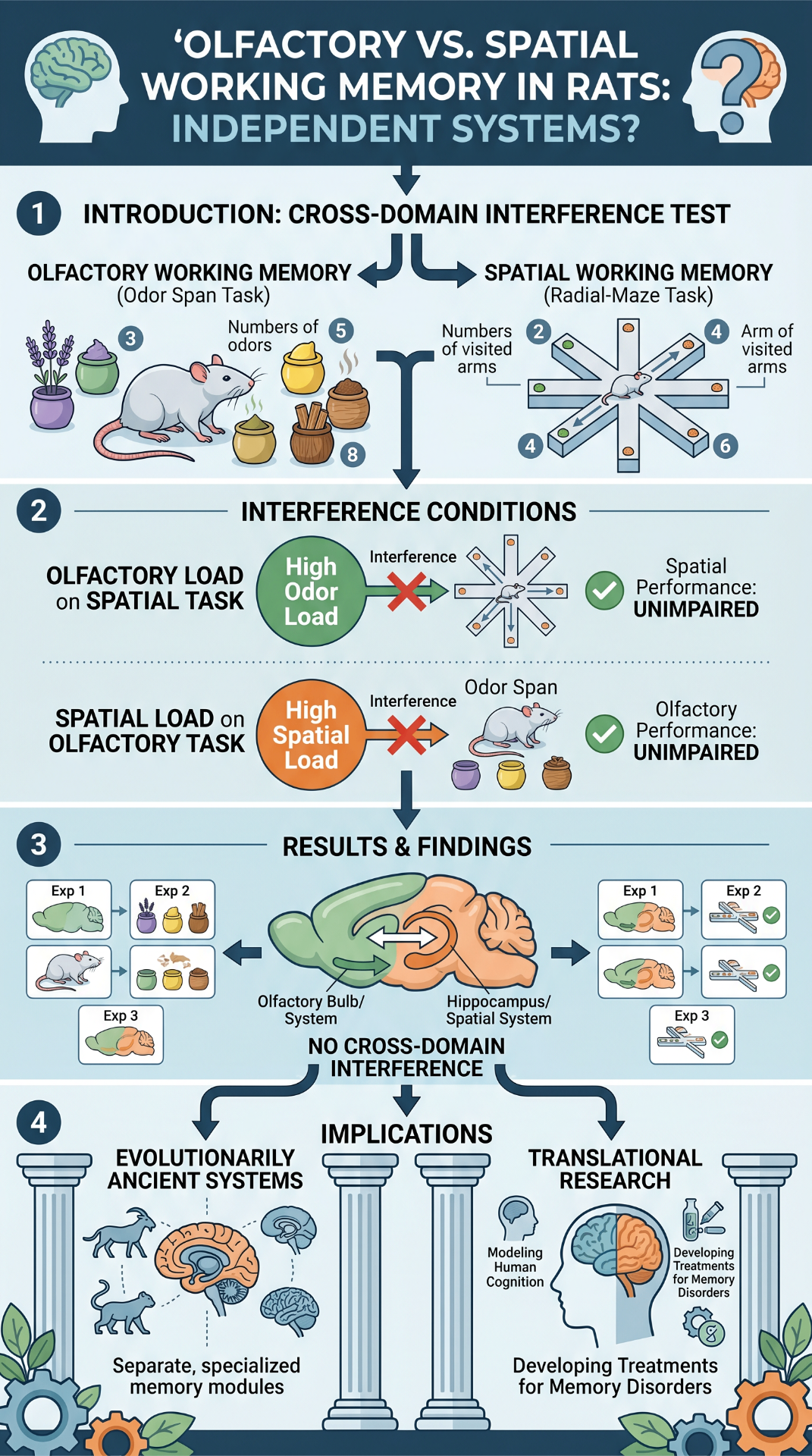
Rats maintained both tasks in parallel without one interfering with the other—consistent with independent olfactory and spatial working-memory systems.
First causal evidence for domain-specific working memory systems in non-human animals, paving the way for mechanistic studies of working-memory circuits in rodents.
From the manuscript
Using a dual-task working-memory paradigm combining olfactory and spatial memory demands, we show that rats can maintain both tasks in parallel without mutual interference. The results provide causal evidence for domain-specific, independent working-memory systems in rats and extend the modular architecture of working memory beyond humans.
- Working Memory
- Animal Models
Infographic summarizing the cross-domain interference tests and findings.
Full citation
Bratch, A., Kann, S., Cain, J. A., Wu, J.-E., Rivera-Reyes, N., Dalecki, S., ... Crystal, J. D. (2016). Working Memory Systems in the Rat. Current Biology, 26(3), 351–355.